
For many people, the phrase “ora et labora” is all they know about the Benedictine Order. It’s catchy and easy to remember, even for those who aren’t fluent in Latin. It means simply “pray and work”, and it’s supposed to describe the essence of the Benedictine life.
In truth, St. Benedictine never uses the phrase in his Rule and it’s hard to say where and when it first originated. Despite this, we can say that it is indeed a good formulation of the spirit of monasticism as understood by this great saint.
Of course, monks do more than just pray and work. They have time for study, recreation, eating, and sleeping, all essential to living a balanced monastic life. Yet the two activities of prayer and work indeed occupy the majority of their day and energy. Together, they make up the foundation of the Benedictine life.
St. Benedict’s intuitions about the ordering of monastic life are so poignant and practical that many other contemplative orders have adopted them to a greater or lesser degree, organizing their schedules so as to alternate prayer and work.
So what is the secret to the success of “ora et labora”? The key to understanding the motto is St. Benedict’s wisdom concerning human nature. When I first talked to a Benedictine sister about the reason behind “ora et labora”, she explained it very simply. The human mind, she said, is not made to focus on just one thing for too long. It needs to alternate occupations to stay balanced and focused.
I’d never really considered such an idea before. In fact, most of my life I had been conditioned to do the exact opposite, namely to try to focus on just one occupation for many hours every day. I’m referring to the emphasis placed on rote learning that goes on in modern classrooms. Here students are expected to sit still and mostly quiet for long hours absorbing academic information. There is little time for recreation or physical activity and absolutely no time for prayer.
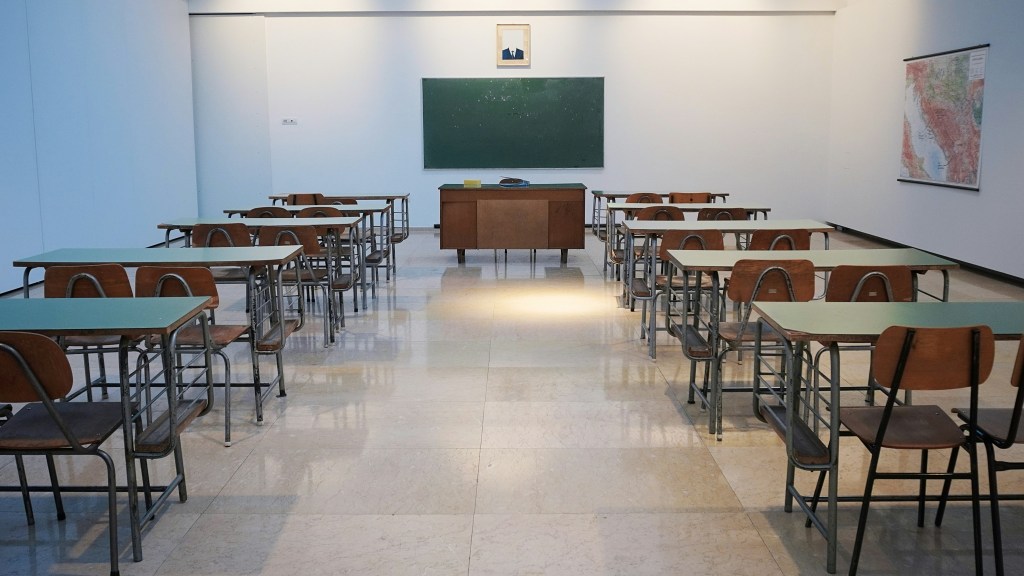
Once students grow up and become workers, the drill is nearly identical. Many people spend their entire working lives sitting in front of a computer screen absorbing and outputting information, and they are expected to do this for eight hours a day, five days a week, for an average of nearly forty years.
In contrast, in a Benedictine monastery, you are never doing the same thing for too long. All occupations are broken down into manageable chunks throughout the day. Someone reading the Rule for the first time might be surprised at St. Benedict’s recommendation that even prayer be “brief”, except when a special inspiration from God prompts us to prolong it.
During my time spent as a postulant in a Benedictine monastery, I got used to this rhythm and found that it was truly congenial to my nature. Prayer was never frustratingly long; you weren’t required to be a saint experiencing mystical ecstasy for hours to do it well. Also, the work times were short enough that even things requiring extra effort did not exhaust my mental and physical energies.
I also really enjoyed how prayer was structured throughout the day. It mainly consisted in the Divine Office, which is made up of different “hours” prayed at different times during the day. Most “hours” are not very long, usually less than thirty minutes. This means that rather than concentrating all our prayer time at one particular moment, our whole day was interspersed with short periods where we focused exclusively on praising God and uniting ourselves to Him.
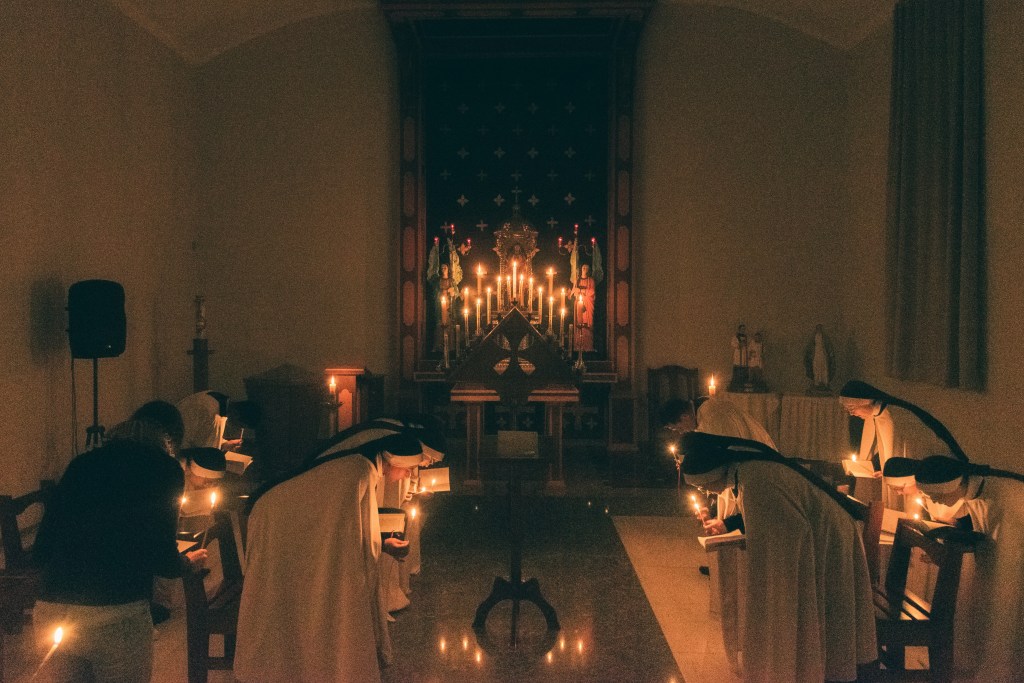
It felt as if we were breathing in the vital oxygen of God’s grace and breathing out our love for Him in a rhythmic manner during the waking hours, so as to continually replenish our soul’s vital energy and purify it from the dross of any imperfections or sins. We would then pour ourselves out into the various activities which occupied our time, expending the effort needed, only to come back for another “breathing” session some time later.
The result was a marvelous sense of balance and wholeness. There was time during the day for all the necessary activities and nothing felt rushed or forced. I found myself wondering how I’d managed to live in any other way and why our society had moved away from such a wise partitioning of activities. It seems to me that applying “ora et labora” to our lives helps us to be in harmony with the nature God gave us.
I also think that this way of living helps us grow in a fundamental awareness: that all human activities, provided they be honest, can find their place within a well-ordered life dedicated fully to God. The monks have left everything to give themselves wholly to Our Lord, yet they are not constantly engaged in formal prayer, as if all other things, including work, were “not spiritual enough” for them.

This is the groundbreaking wisdom of our Christian Faith. Our Lord came to the earth as a little baby and engaged in all the activities proper to man. He certainly spent time in formal prayer, sometimes leaving his active ministry for hours to pray to His Father. Yet he also spent much time working as a carpenter with St. Joseph in Nazareth. He ate and slept like all men do, and sometimes needed rest from the toils of the day.
Because he did all these things, we can use all of them as steps on our upward ascent towards God. Indeed, God expects us to be fully human as we are made divine, engaging in the activities proper to the nature He so lovingly created for us.
Now that I no longer live in the monastery, it’s hard to maintain a rigorous schedule and I often have to make accommodations for unforeseen circumstances. Yet I have maintained the spirit of “ora et labora” and still live by it. I try to alternate activities so that I am not forced to concentrate on one thing for too long and I intersperse my day with prayer to keep my soul “breathing” properly. I love it and I don’t think I could live any other way.
But I understand it’s not an easy rule of life for everyone. My work life is very flexible so I can often take time out of my day and dedicate it to prayer or study. I’m the one deciding when and how much to work, so I can tailor my work life to my spiritual needs.
For many people, this just isn’t realistic. If you have a traditional job or a very demanding family life, you’re probably not going to be able to implement a very “ora et labora” schedule every day. That’s ok. What you can do is keep the mindset and try to work within the constraints of your responsibilities.
Instead of doing all your prayers at just one random moment during the day, you could try to divide them up into two chunks, one in the morning and one in the evening. This already establishes a rhythm that gives purpose and direction to the whole day. You can also try taking short breaks during your work day to say a few prayers or just raise your heart to God. Five minutes is all you need if you make every moment count.
Also, try to find a balance in your life between all the different activities. Make sure enough time is given to prayer, work, recreation, community, eating and sleeping. If there’s an imbalance in the amount of time you devote to something, try to rectify it.

Through the wisdom of “ora et labora”, St. Benedict teaches the monks to give all things their proper time for the ultimate harmony of body, mind, and soul. A balanced person is able to have a healthy relationship with God. A balanced person gives glory to God. Always remember that!
 Tu Es Vita
Thank you for the clarity of your explanation of “Ora et Labora” and especially your examples of how to incorporate this way of prayer into our daily lives in a fruitful and balanced way.
LikeLike