Today is the fifth Sunday after Pentecost in the traditional liturgical calendar. During the time after Pentecost, the longest liturgical season of the year, the Church focuses on presenting Our Lord’s essential teachings as he expressed them during his public ministry and invites us to reflect more deeply on the meaning of our life as Christians.
In today’s liturgy, the gospel is from St. Matthew 5: 20-24:
For I tell you, that unless your justice abound more than that of the scribes and Pharisees, you shall not enter into the kingdom of heaven. You have heard that it was said to them of old: Thou shalt not kill. And whosoever shall kill shall be in danger of the judgment. But I say to you, that whosoever is angry with his brother, shall be in danger of the judgment. And whosoever shall say to his brother, Raca, shall be in danger of the council. And whosoever shall say, Thou Fool, shall be in danger of hell fire. If therefore thou offer thy gift at the altar, and there thou remember that thy brother hath anything against thee; leave there thy offering before the altar, and go first to be reconciled to thy brother: and then coming thou shalt offer thy gift.
This is a dense passage that leads us to meditate on the true meaning of justice.
To the Jewish mind of the time, any reference to justice would have called to mind the Mosaic Law. The interpreters of this Law were the Pharisees and scribes, who taught in the synagogues and oversaw all the religious functions of the time.

Considered in this context, Our Lord’s opening remark must have sounded rather shocking to the ears of his Jewish listeners: He states very plainly that the justice of the Pharisees and the scribes is not enough to enter the Kingdom of Heaven.
But what does he mean by this? In another scriptural passage, Our Lord calls the Pharisees “white-washed tombs” (Matthew 23:27). This is because they were attentive to their exterior behavior, especially to the many manmade prescriptions and customs derived from their tradition, yet their hearts were wicked and uncharitable towards their neighbor. They were “white” on the outside, but “rotten” on the inside.
Our Lord means to warn us that exterior action is not enough to merit salvation.
Many purely human religious systems, concerned as they are with guaranteeing social order, tend to focus on the external aspects of man’s behavior toward others. Don’t steal, don’t lie, don’t murder, we are told.
But God wants to go deeper than that. His aim is not only to guarantee social order, as good as that might be, but to transform and renew the heart of man. God is chiefly concerned with the interior dispositions of the heart.
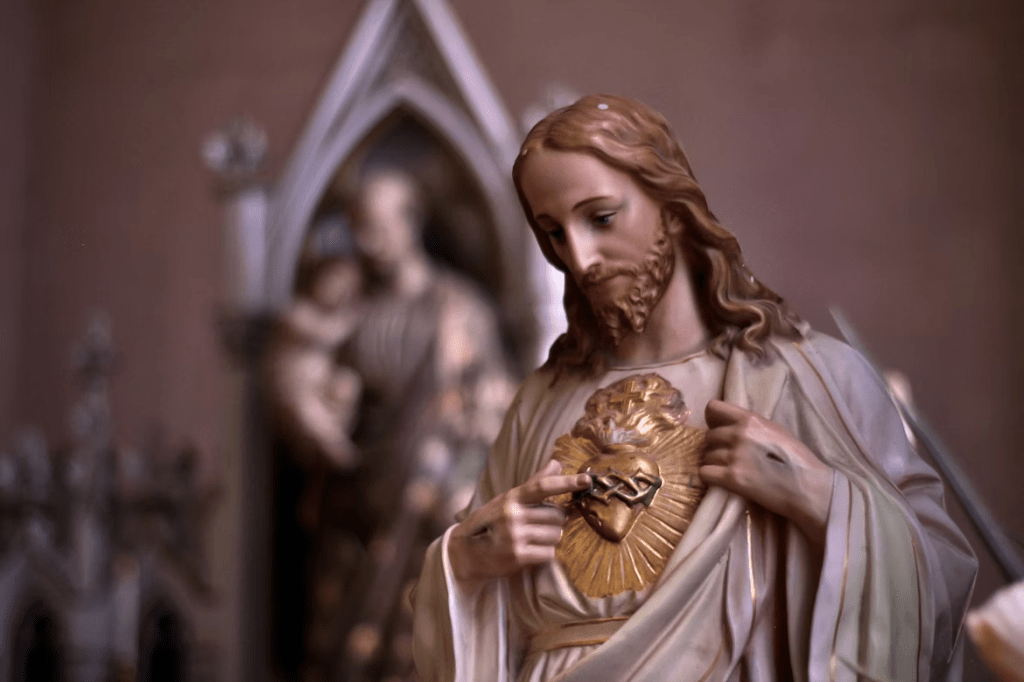
The just man, according to this passage of Scripture, is not only the one who does not kill his brother, but most importantly he who does not even harbor anger towards him in his heart; the just man has a heart filled with charity, and from this heart flow the external actions which are so good for societal relations.
This is undoubtedly a high standard. To follow God’s law perfectly, we are to avoid even the smallest evil thought against our neighbor; we must extend to him every kindness and bear with his imperfections and shortcomings with unyielding patience.
There is an aspect of this high standard that is not emphasized enough: the image of man that it reveals to us. In short, we are created for greatness.
The average man may think it impossible to live with a heart perfectly rooted in charity. He may well believe that controlling his external actions in the big things, such as avoiding murder, is already quite a lot to demand.
And yet God is telling us, through his new commandment of love, that He made us for greater things, that we are capable of soaring to heights that we can scarcely imagine. We are not wholly incapable of goodness, as Luther would have us believe. Rather, through the work of grace, we can aspire to a completely transformed heart, made capable of the overflowing charity of God Himself.
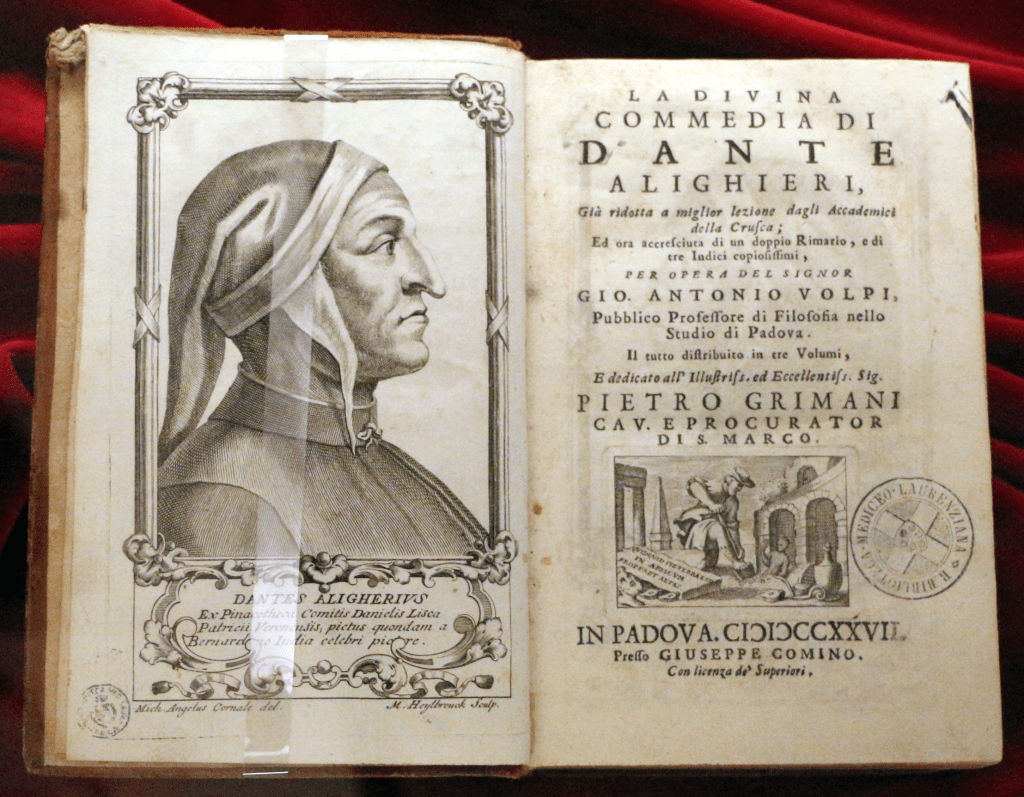
We should never forget this truth. Dante put it beautifully in his Divine Comedy when he said, “fatti non foste per viver come bruti, ma per seguir virtute e canoscenza” (you were not made to live like brutes but to follow virtue and understanding).
In reading today’s passage from Scripture, let us not simply pause in anxious consideration of our shortcomings when it comes to the law of charity. Certainly, there will be many. We are in the status viatoris (wayfaring state), as the Scholastics put it. That is to say we are pilgrims making our way slowly up the mountain that leads to Heaven, still imperfect and beset by a thousand difficulties.
Rather, let us fix our gaze on the heights of our dignity as persons made in the image of God and redeemed by Christ, reminding ourselves that we were made for great things and that these great things are possible to us. There is an essential goodness in us; this goodness comes from our being creatures of an infinitely good Creator. Such goodness, however deeply it may be buried under a mountain of sin, can always be touched and redeemed, as long as we are alive, and can be raised high above evil and destruction to fulfill its purpose, namely to be and to love.
The virtue that most comes to our aid in this effort is hope. Hope is our luminous, delicate bridge to greatness, by which we firmly trust in God’s essential help in reaching the heights we were made for. We cannot do it on our own, but through Christ, all things are possible.

Sometimes our sins make us feel small and incapable. In one sense, we really are small and incapable, and our failings are good for us. They remind us of our limits as finite, broken creatures. Yet there is a fine line between the medicine of humility and the poison of self-loathing. If our failings lead us to disparage our worth and potential, to forget the essential goodness of our creation, we risk falling into an attitude of despondency and despair that will lead us away from God.
Rather, we must keep these truths together in our hearts: we are finite and broken, yet we are made for greatness. If we manage to harmoniously embrace both these truths, we will see ourselves as God sees us, and we will be open to accepting His help in fulfilling our vocation as immortal beings made for an all-consuming and eternal love.
 Tu Es Vita